


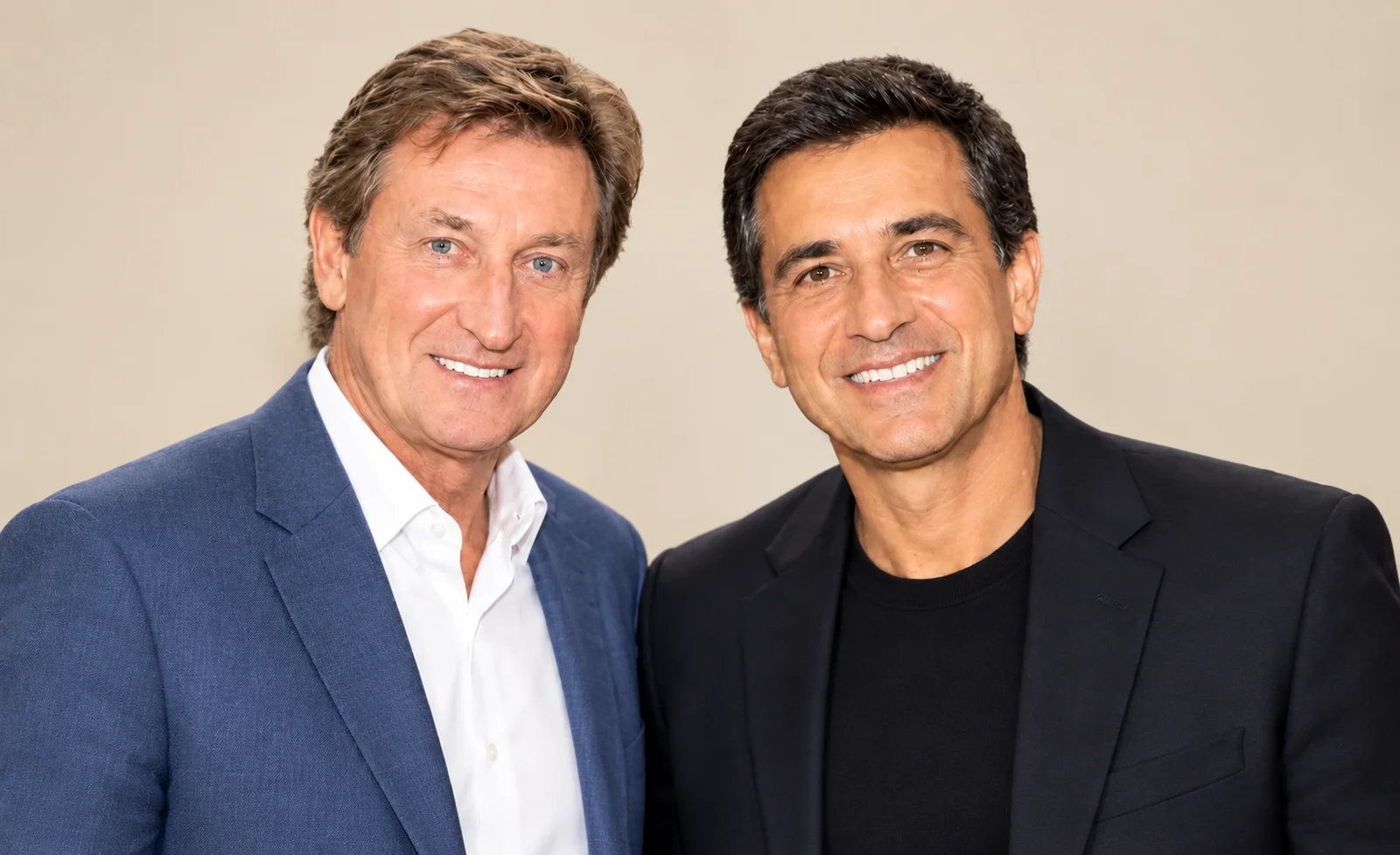
Success can take many forms. For some people, it comes from extraordinary performance in a competitive arena. For others, it develops through strategic decisions, organizational leadership, and the ability to guide global businesses through changing markets. Wayne Gretzky and Miguel Patricio represent these different paths, with careers that offer useful insights into preparation, adaptability, teamwork, and long-term influence.
Gretzky is widely regarded as one of the greatest players in hockey history. His achievements with the Edmonton Oilers, Los Angeles Kings, and other NHL teams helped shape the sport’s popularity across generations. Patricio, meanwhile, built an international business career in the consumer goods industry and became chief executive officer of Anheuser-Busch InBev, one of the world’s largest brewing companies.
At first glance, their professional lives have little in common. One built a legacy through athletic excellence, while the other led complex commercial organizations. Yet examining Wayne Gretzky and Miguel Patricio together provides an interesting way to understand how individuals develop expertise, make decisions under pressure, and create influence beyond their immediate responsibilities.
Who Are Wayne Gretzky and Miguel Patricio?
Understanding their backgrounds helps explain both the differences between their careers and the principles that connect them.
Wayne Gretzky: A Transformational Figure in Hockey
Wayne Gretzky, nicknamed “The Great One,” was born on January 26, 1961, in Brantford, Ontario, Canada. He became a professional hockey player in the World Hockey Association before joining the National Hockey League with the Edmonton Oilers in 1979.
Gretzky quickly established himself as an exceptional offensive player. His vision, anticipation, passing ability, and understanding of space allowed him to influence games in ways that went beyond scoring goals. He often appeared to recognize developing opportunities before other players could react.
During his NHL career, Gretzky played for the Edmonton Oilers, Los Angeles Kings, St. Louis Blues, and New York Rangers. He won four Stanley Cup championships with Edmonton and earned nine Hart Memorial Trophies as the NHL’s most valuable player.
He retired in 1999 with 2,857 regular-season points, a record that remains one of the defining achievements in professional hockey. His move to Los Angeles in 1988 also helped increase the sport’s visibility in a major American market, contributing to hockey’s broader cultural reach.
Gretzky’s legacy is therefore not Wayne Gretzky and Miguel Patricio limited to statistics. His career demonstrates how technical ability, anticipation, consistency, and a distinctive approach to competition can influence an entire sport.
Miguel Patricio: A Global Consumer Goods Executive
Miguel Patricio is a Portuguese business executive known for his international experience in marketing, brand management, and corporate leadership. Before becoming CEO of Anheuser-Busch InBev in 2020, he held senior positions across the consumer goods industry.
His career included work at companies such as Philip Morris International and The Coca-Cola Company, followed by a prominent leadership role at AB InBev. His background in marketing and commercial strategy helped prepare him to lead a business operating across numerous countries, markets, and consumer segments.
As CEO, Patricio was responsible for guiding a large multinational organization through a business environment shaped by changing consumer preferences, economic uncertainty, competitive pressures, and the continuing importance of established beer brands.
His work illustrates a different kind of performance from Gretzky’s. Rather than measuring success through individual statistics or championship victories, corporate leadership involves coordinating teams, allocating resources, building brands, and making decisions whose effects may unfold over several years.
Both careers required expertise, but the nature of that expertise was fundamentally different.
Wayne Gretzky and Miguel Patricio: Comparing Their Career Paths
Although they worked in different industries, their careers reveal how success depends on more than raw talent or technical knowledge.
| Career dimension | Wayne Gretzky | Miguel Patricio |
|---|---|---|
| Primary field | Professional hockey | Consumer goods and corporate management |
| Core strength | Anticipation and offensive creativity | Marketing and commercial strategy |
| Main performance measures | Goals, assists, points, championships | Business performance, brand development, organizational leadership |
| Leadership environment | Teammates, coaches, opponents | Employees, executives, customers, shareholders |
| Lasting influence | Hockey history and popular culture | Global brand management and corporate leadership |
One important factual distinction is worth making: Patricio served as AB InBev’s global chief marketing officer and later became CEO of Kraft Heinz in July 2019. He was not CEO of AB InBev. His leadership experience at both companies provides the relevant business comparison. Representatives of the Main Shareholders+1
Different Industries, Similar Demands
Professional sports and multinational business both require individuals to process information quickly, respond to competition, and work toward shared objectives.
For Gretzky, those demands appeared during games. He had to read opposing defenses, identify passing opportunities, and adapt as teammates and opponents moved around the ice.
For Patricio, the equivalent challenge involved understanding markets, consumer behavior, brand positioning, and organizational priorities. A marketing strategy that worked in one country might need substantial adjustment in another because of differences in culture, purchasing power, competition, and consumer expectations.
Neither environment rewards a single skill in isolation. Hockey intelligence must be combined with execution and teamwork. Business strategy must be supported by sound operations, capable employees, and an understanding of the market.
What Wayne Gretzky Teaches Us About Strategic Thinking
Gretzky’s reputation rests partly on his extraordinary scoring record, but his playing style offers lessons that extend beyond sports.
Anticipation Can Be More Valuable Than Reaction
Gretzky was renowned for reading the game and recognizing opportunities before they fully developed. His effectiveness came not simply from reacting quickly but from anticipating where the puck and other players would be.
This distinction matters in many professional settings.
A manager who waits until a competitor launches a new product may already be behind. A manager who monitors changing customer preferences, supply conditions, and emerging technologies has more time to prepare.
The same principle applies to project management. Identifying a likely bottleneck early can be more valuable than working harder after a deadline has already been threatened.
Anticipation does not mean predicting the future perfectly. It means gathering relevant information, recognizing patterns, and preparing for plausible outcomes.
Consistency Builds Exceptional Performance
Gretzky’s NHL career lasted from 1979 to 1999. His 2,857 regular-season points included 894 goals and 1,963 assists, according to NHL records. NHL+1
Numbers of that scale reflect sustained performance across many seasons, not just a handful of memorable games.
For professionals, the lesson is to develop repeatable habits rather than rely on occasional bursts of motivation. Regular preparation, careful review, and a willingness to learn from mistakes help create a foundation for long-term improvement.
A salesperson, for example, may improve through consistent customer research and follow-up. A software developer may become more effective through regular testing and code review. In both cases, small improvements can compound over time.
Teamwork Can Multiply Individual Talent
Hockey is a team sport, and even an exceptional player depends on teammates who create space, defend effectively, and capitalize on opportunities.
Gretzky’s career with the Edmonton Oilers illustrates this relationship. His individual brilliance contributed to four Stanley Cup championships, but those titles were also team achievements involving coaching, complementary skills, and coordinated execution. gretzky.com+1
The same principle applies to leadership outside sports. A strong executive cannot personally handle every decision, customer interaction, or operational challenge. Success depends on building teams with the skills and authority to execute a shared plan.
Individual excellence creates opportunities. Effective collaboration turns those opportunities into collective results.
What Miguel Patricio Teaches Us About Business Leadership
Patricio’s career provides a complementary perspective on strategic execution, especially in marketing and international management.
Understanding Consumers Is a Competitive Advantage
Patricio held senior roles across several consumer goods companies before and during his time at AB InBev. He served as chief marketing officer of AB InBev from 2012 to 2018 and held leadership responsibilities in North America and Asia Pacific. He later became CEO of Kraft Heinz. Representatives of the Main Shareholders+1
That background highlights the importance of understanding why people choose one product over another.
A business can invest heavily in advertising and still struggle if its product does not meet consumer expectations. Effective marketing requires more than visibility. It involves identifying customer needs, understanding purchasing behavior, developing a clear brand position, and delivering a product experience that supports the brand’s promise.
For a small business, this might mean discovering that customers value dependable delivery more than an extensive product catalog. For a large company, it might mean adapting a global brand to local preferences without losing its recognizable identity.
Global Strategy Requires Local Understanding
International businesses face a difficult balance: maintaining a consistent identity while adapting to different markets.
A strategy that succeeds in the United States may not work equally well in Brazil, China, or Europe. Consumer tastes, regulations, retail structures, and competitive conditions can differ substantially.
Patricio’s experience across geographic regions illustrates why international leadership requires both broad strategic thinking and attention to local conditions. Representatives of the Main Shareholders+1
Consider a company introducing a product in several countries. Its central team might establish common quality standards and brand guidelines, while local teams adapt pricing, distribution, messaging, and promotional activities.
The goal is not to make every market identical. It is to maintain strategic coherence while responding intelligently to meaningful differences.
Strong Leadership Connects Strategy With Execution
Business strategy is valuable only when an organization can put it into practice.
Executives must communicate priorities, allocate resources, assess risks, and ensure that teams understand how their work contributes to broader objectives. They must also recognize when a plan is not delivering the intended results.
Patricio’s progression through marketing, regional leadership, and a chief executive role reflects experience with different levels of organizational responsibility. His career offers an example of how commercial expertise can support broader management responsibilities, although each executive role introduces challenges that require additional skills.
For aspiring leaders, an important takeaway is to look beyond job titles. Developing an understanding of customers, operations, finance, and people management can create a more complete foundation for senior leadership.
Five Leadership Lessons From Both Careers
The careers of Wayne Gretzky and Miguel Patricio offer several practical lessons for people who want to improve their performance, manage teams, or build sustainable careers.
1. Develop Expertise Before Chasing Recognition
Gretzky developed his hockey skills through years of practice, while Patricio built experience across multiple companies and international markets.
Their paths demonstrate that professional credibility generally develops through accumulated knowledge and demonstrated results.
For someone starting a career, this means learning the fundamentals, seeking feedback, and taking on responsibilities that expand their abilities. Recognition may follow, but it is difficult to sustain without a strong foundation.
2. Make Decisions With the Bigger Picture in Mind
Gretzky’s anticipation helped him understand how individual movements affected the development of a game. Patricio’s business background required understanding how marketing decisions influenced brands, customers, and commercial objectives.
In either setting, a decision that looks attractive in isolation may produce poor results when its wider consequences are ignored.
Before making an important decision, consider the immediate objective, the available alternatives, the risks, and the longer-term implications.
3. Adapt Without Abandoning Your Strengths
Adaptability is essential because the conditions that support success rarely remain unchanged forever.
Gretzky played through different stages of his career and represented multiple NHL teams. Patricio worked across different regions and corporate environments, where business priorities and consumer expectations varied.
The practical lesson is to distinguish between core strengths and established habits. Core strengths deserve continued development, but habits should change when evidence suggests a better approach.
4. Measure What Matters
Gretzky’s performance can be evaluated through goals, assists, points, and championships. Business leaders must consider a broader range of measures, including sales, profitability, customer satisfaction, brand performance, and employee effectiveness.
The right measurements depend on the objective.
A company focused on long-term growth, for instance, should not judge every decision solely by immediate revenue. It should also consider customer retention, product quality, and the financial sustainability of its strategy.
Clear measurements make it easier to identify progress, uncover problems, and adjust plans before small issues become major setbacks.
5. Build a Legacy Beyond Individual Achievements
Gretzky’s influence extends beyond his playing statistics because he helped define how generations of fans understand hockey. Patricio’s career illustrates how business leaders can influence organizations through brand strategy, management practices, and the development of teams.
Lasting influence is rarely determined by one successful season or one strong business quarter. It develops through repeated contributions and the ability to create value that continues beyond a single achievement.
What Makes Their Stories Relevant to Young Professionals?
The comparison between Gretzky and Patricio is particularly useful for students, entrepreneurs, managers, and early-career professionals because it shows that there is no single route to professional success.
A student interested in sports management might learn from Gretzky’s preparation, game awareness, and collaboration. Someone pursuing marketing or corporate leadership might study Patricio’s progression through commercial and regional management roles.
However, the most useful approach is to translate their experiences into specific actions rather than simply admire their achievements.
Young professionals can start by identifying the skills most relevant to their goals, establishing measurable improvement targets, and seeking opportunities to work with people whose strengths differ from their own.
They should also recognize that professional development includes setbacks. Not every strategy succeeds, every decision produces the desired result, or every opportunity leads to advancement. The ability to evaluate mistakes objectively and make adjustments is an important part of sustained growth.
Are Sports Leadership and Business Leadership Really Comparable?
They are comparable in several important ways, but they should not be treated as identical.
Sports performance often involves immediate feedback. A player can see the outcome of a pass, shot, or defensive decision within seconds. Business decisions may take months or years to produce measurable results, and those results can be influenced by economic conditions, competitors, regulations, and other factors beyond a leader’s control.
The responsibilities also differ. An athlete generally operates within a defined team structure and competitive format. A chief executive must consider employees, customers, investors, suppliers, regulators, and the broader organization.
These differences make direct comparisons difficult. Gretzky’s records cannot be translated into business performance metrics, and Patricio’s executive experience does not provide a basis for ranking his leadership against a hockey player’s achievements.
Nevertheless, both careers demonstrate the value of preparation, sound judgment, effective collaboration, and the willingness to adjust when circumstances change.
The comparison is most useful when it highlights transferable principles without ignoring the unique demands of each profession.
Frequently Asked Questions
Who are Wayne Gretzky and Miguel Patricio?
Wayne Gretzky is a Canadian former professional hockey player widely regarded as one of the greatest players in NHL history. Miguel Patricio is a Portuguese business executive known for his leadership roles in the consumer goods industry, including serving as CEO of Kraft Heinz from 2019 to 2023.
What is Wayne Gretzky best known for?
Gretzky is best known for his exceptional NHL scoring records, four Stanley Cup championships with the Edmonton Oilers, and nine Hart Memorial Trophies as the league’s most valuable player. He retired in 1999 with 2,857 regular-season points. gretzky.com+1
What is Miguel Patricio known for?
Patricio is known for his international consumer goods career, particularly his marketing leadership at AB InBev and his tenure as CEO of Kraft Heinz. He has held senior responsibilities involving brand management, regional operations, and corporate strategy. Representatives of the Main Shareholders+1
Was Miguel Patricio the CEO of AB InBev?
No. Patricio served as AB InBev’s global chief marketing officer and held other executive positions at the company. He became CEO of Kraft Heinz in July 2019 and served in that position through 2023. Representatives of the Main Shareholders+1
What leadership qualities do Gretzky and Patricio share?
Their careers illustrate the importance of preparation, strategic thinking, adaptability, teamwork, and sustained professional development. Their specific responsibilities differed, so these similarities are best understood as general leadership lessons rather than evidence that their approaches were identical.
How did Wayne Gretzky influence hockey?
Gretzky influenced hockey through his extraordinary scoring and playmaking, his achievements with Edmonton, and his contribution to the sport’s visibility in markets such as Los Angeles. His career helped establish a benchmark for offensive excellence in professional hockey. gretzky.com+1
What can entrepreneurs learn from Miguel Patricio?
Entrepreneurs can learn the importance of understanding customers, building recognizable brands, adapting to local markets, and connecting strategic plans with execution. His career also illustrates the value of developing commercial expertise before taking on broader leadership responsibilities.
Why is teamwork important in both sports and business?
Teamwork allows individuals with different abilities to contribute toward a shared objective. In hockey, players coordinate their actions to create scoring opportunities and defend against opponents. In business, teams combine expertise across functions to develop products, serve customers, and execute organizational plans.
How can young professionals apply lessons from these careers?
They can focus on building expertise, learning from feedback, setting measurable goals, collaborating with others, and adapting their methods when circumstances change. They should also choose lessons that fit their own industry rather than copying the approach of a successful person without considering context.
What is the biggest difference between their careers?
The primary difference is how their work is performed and evaluated. Gretzky competed as an elite athlete in a structured sporting environment, where individual statistics and team results provide visible measures of performance. Patricio worked in corporate management, where success depends on organizational results, commercial judgment, and the ability to coordinate complex operations.
Conclusion
Wayne Gretzky and Miguel Patricio represent two distinct forms of professional achievement. Gretzky built a remarkable legacy through hockey intelligence, consistent performance, and contributions to one of North America’s most prominent sports. Patricio developed an international business career through marketing expertise, regional management, and executive leadership.
Their experiences cannot be measured on the same scale, but they offer complementary perspectives on success. One illustrates how anticipation, preparation, and teamwork can elevate athletic performance. The other demonstrates the importance of understanding consumers, adapting to different markets, and turning strategy into organizational action.
For readers interested in leadership and professional development, the central lesson is straightforward: lasting success requires more than talent or ambition. It depends on developing relevant skills, making informed decisions, working effectively with others, and continuing to learn as circumstances evolve.

1 Comment
Pingback: Derek Jeter and Hiroshi Mikitani: Leadership, Business Strategy, and the Power of Building Lasting Brands