


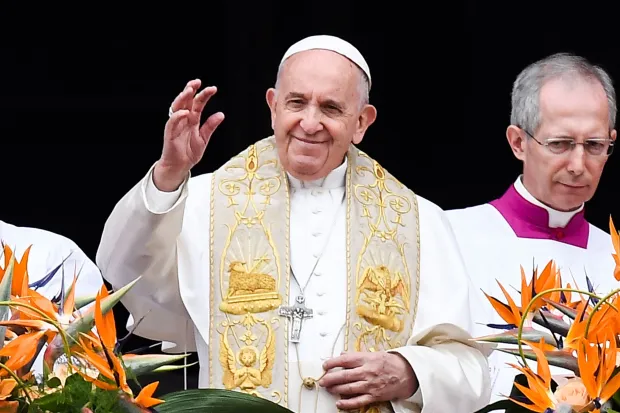
Gene Hackman and Pope Francis came from very different worlds, yet their lives offer an interesting way to examine public service, personal conviction, leadership, and the meaning of a lasting legacy. Hackman became one of Hollywood’s most respected actors through decades of memorable performances, while Pope Francis emerged as a globally recognized religious leader who emphasized compassion, humility, and concern for people on society’s margins.
There was no defining professional partnership between the two men, and they should not be treated as figures whose lives were directly connected. Their significance lies instead in the different ways they influenced public life. One helped audiences understand human nature through film, and the other sought to guide millions through religious teaching and moral leadership.
Looking at Gene Hackman and Pope Francis side by side reveals how people can leave distinct marks on the world without sharing the same profession, beliefs, or responsibilities. Their stories also raise broader questions about authenticity, the pressures of public attention, and what remains after a celebrated life comes to an end.
Who Were Gene Hackman and Pope Francis?
Gene Hackman was an American actor known for his versatility, commanding screen presence, and ability to portray complicated characters. Pope Francis was an Argentine Catholic leader who became the first pope from Latin America and the first Jesuit to hold the office.
Although their backgrounds were dramatically different, both became internationally recognizable figures whose influence extended well beyond their immediate professional communities.
Gene Hackman: An Acclaimed American Actor
Born on January 30, 1930, in San Bernardino, California, Eugene Allen Hackman developed into one of the defining American actors of his generation. His career included crime dramas, thrillers, westerns, political stories, and comedies.
Hackman was particularly respected for making fictional characters feel believable. Rather than relying on glamour or exaggerated gestures, he often used subtle expressions, controlled delivery, and physical presence to communicate ambition, insecurity, anger, and vulnerability.
His performances in The French Connection and Unforgiven earned him Academy Awards. He also received recognition for films such as The Conversation, Hoosiers, and Mississippi Burning.
Hackman retired from acting in the early 2000s, choosing a quieter life away from Hollywood’s constant attention. His decision reinforced an important aspect of his public image: his professional achievements did not require him to remain permanently in the spotlight.
Pope Francis: A Religious Leader From Argentina
Pope Francis was born Jorge Mario Bergoglio on December 17, 1936, in Buenos Aires, Argentina. Before becoming pope, he served as a Jesuit priest, an archbishop, and a cardinal.
On March 13, 2013, he was elected pope following the resignation of Benedict XVI. His election marked several historic firsts, including the selection of the first pope from the Americas.
Francis frequently emphasized mercy, care for vulnerable communities, environmental responsibility, and the importance of approaching people with compassion. His papacy also brought renewed international attention to questions involving poverty, migration, social inequality, and the Catholic Church’s institutional responsibilities.
He died on April 21, 2025, at the age of 88. His papacy lasted approximately 12 years and became a significant chapter in modern Catholic history.
Two Different Paths to International Recognition
The comparison between Gene Hackman and Pope Francis is not about who achieved more. Their professions demanded different skills, served different audiences, and operated under different expectations.
Hackman built his reputation through years of disciplined acting and a willingness to take on challenging roles. Francis developed his influence through religious leadership, public communication, and his efforts to shape the Catholic Church’s relationship with the modern world.
How Gene Hackman Changed American Cinema
Hackman’s career demonstrated that a leading actor did not need to fit a conventional Hollywood image to become a major star. He often portrayed flawed men whose motivations were difficult to categorize.
In The French Connection, he played Detective Jimmy “Popeye” Doyle, a determined New York City police officer. The performance earned him the Academy Award for Best Actor and helped establish his reputation as a powerful screen presence.
In The Conversation, Hackman portrayed surveillance expert Harry Caul, a private and increasingly troubled man whose professional work creates moral uncertainty. The film showed his ability to communicate internal conflict without relying on lengthy dialogue.
His role as Little Bill Daggett in Unforgiven offered another contrast. Hackman played a violent, self-assured sheriff in a revisionist western that questioned traditional ideas about heroism and justice. The performance earned him the Academy Award for Best Supporting Actor.
These films demonstrate why his legacy extends beyond individual awards. Hackman helped make morally complicated characters central to American filmmaking. His work continues to provide aspiring actors and filmmakers with examples of how restraint, timing, and emotional realism can strengthen a performance. AP News+1
How Pope Francis Influenced the Catholic Church
Pope Francis approached leadership from a different starting point. His role involved religious doctrine, pastoral responsibility, international diplomacy, and the governance of a global institution.
From the beginning of his papacy, Francis cultivated an image of simplicity. His choice of name honored St. Francis of Assisi, associated with poverty, peace, and care for creation. His public messages repeatedly returned to the needs of poor communities, migrants, and people who felt excluded.
Environmental responsibility became another important theme. In his 2015 encyclical Laudato Si’, Francis connected concern for the natural environment with questions of poverty, consumption, and social responsibility.
His leadership also generated disagreement. Some Catholics welcomed his emphasis on pastoral inclusion and institutional reform, while others criticized aspects of his approach to doctrine, liturgy, and Church governance. His handling of clergy sexual abuse also faced serious scrutiny, illustrating the gap that can exist between a leader’s stated principles and the public’s expectations of accountability. Vatican+1
Francis’s historical importance therefore rests on more than his popularity. His papacy brought questions about compassion, authority, reform, and the Church’s responsibilities into international conversations.
What Gene Hackman and Pope Francis Had in Common
Despite their different backgrounds, several themes help explain why both men remain subjects of public interest.
A Commitment to Their Chosen Work
Hackman spent decades developing his acting abilities, taking on roles that required different emotional and physical approaches. His career included both major commercial productions and films that explored difficult moral questions.
Francis followed a long path through religious life before becoming pope. His responsibilities grew from priestly service in Argentina to leadership of the worldwide Catholic Church.
Neither man’s public reputation emerged overnight. Both developed their influence over many years, through repeated decisions and sustained professional or religious commitments.
Their experiences illustrate a useful principle: lasting influence often depends on consistency rather than a single celebrated moment.
Different Approaches to Human Complexity
Hackman frequently portrayed characters who were neither entirely admirable nor entirely villainous. His performances encouraged viewers to consider how fear, ambition, pride, and personal history shape human behavior.
Francis, meanwhile, often urged people to approach others with mercy rather than immediate condemnation. His religious teaching emphasized human dignity, forgiveness, and attention to those experiencing hardship.
These approaches are not identical. An actor explores human behavior through fictional characters, while a religious leader communicates moral and spiritual principles. Nevertheless, both forms of public work can encourage audiences to look beyond simplistic judgments.
Public Influence Beyond Their Immediate Roles
Hackman’s influence reached beyond movie theaters. His performances became part of the broader vocabulary of American cinema, helping shape expectations for character acting.
Francis’s influence extended beyond Catholic communities. His statements about poverty, peace, migration, and environmental protection frequently entered public discussions involving politics, ethics, and international affairs.
Their examples show how people can affect audiences who do not necessarily share their backgrounds or personal convictions.
Leadership, Humility, and the Limits of Public Recognition
The comparison becomes particularly interesting when considering how each man related to public attention.
Hackman was widely respected, but he did not build his later life around constant celebrity appearances. After retiring from acting, he largely withdrew from the entertainment industry and pursued interests outside film, including writing. His career suggests that professional recognition and a desire for privacy can coexist. AP News+1
Francis occupied a position in which public visibility was inseparable from his responsibilities. As pope, he regularly addressed large gatherings, met political and religious leaders, and communicated with Catholics around the world. Even so, he promoted a simpler model of leadership and repeatedly drew attention to people with limited social or economic power.
Their circumstances highlight two different interpretations of humility.
For Hackman, humility could mean allowing the work to speak for itself and stepping away from the spotlight. For Francis, it involved presenting leadership as service rather than personal privilege.
Neither example establishes a universal formula for success. A private individual and the head of a global religious institution face fundamentally different demands. Still, their lives suggest that public recognition need not become the central measure of a person’s value.
Gene Hackman and Pope Francis: Their Lasting Legacies
Both men died in 2025, bringing renewed attention to their contributions and the ways they would be remembered.
Gene Hackman died at age 95. His death was announced after he and his wife, Betsy Arakawa, were found at their home in Santa Fe, New Mexico. The subsequent medical findings identified cardiovascular disease as the cause of Hackman’s death, with Alzheimer’s disease listed as a significant contributing factor. UPI+1
Pope Francis died on April 21, 2025, at age 88, following a period of serious illness. His death marked the end of a papacy that began in March 2013 and introduced a leader whose background and priorities differed from those of many of his predecessors. Vatican+1
Hackman’s Legacy in Film
Hackman’s movies remain important because they demonstrate the range of human experiences that cinema can explore. He could play a determined investigator, a troubled professional, a demanding coach, or a ruthless authority figure without making every character feel the same.
For viewers discovering his work today, the best starting point may depend on personal interests. The French Connection offers a landmark crime performance, The Conversation explores privacy and paranoia, and Unforgiven examines violence and the mythology of the American West.
His legacy is also a reminder that a long career can be defined by quality and variety rather than constant public exposure.
Francis’s Legacy in Religion and Society
Francis left behind a complex legacy within the Catholic Church. Supporters emphasized his concern for marginalized people, his environmental advocacy, and his efforts to make Church leadership more approachable. Critics continued to question his decisions and the pace or effectiveness of institutional reform.
His influence will be evaluated through the long-term effects of his teachings, policies, appointments, and public example. Religious leadership is rarely judged by one measure, and historical assessments of his papacy will continue to develop.
Together, these legacies demonstrate why public figures are best understood through their work, decisions, and documented impact rather than through reputation alone.
What Their Stories Teach About Success and Meaning
The lives of Gene Hackman and Pope Francis offer different lessons about achievement.
Hackman’s career shows the value of craft, patience, and the willingness to explore difficult material. His performances remind viewers that compelling work often emerges from careful attention to human complexity.
Francis’s papacy highlights the challenges of leadership within a large institution. His emphasis on compassion and service resonated with many people, while the controversies surrounding his tenure show why good intentions must be considered alongside outcomes and accountability.
Neither man provides a perfect model for every situation. Their careers unfolded in different environments, and their responsibilities cannot be measured on a single scale.
Yet both demonstrate that a meaningful legacy can extend beyond personal fame. It can live in the art people continue to watch, the ideas people continue to debate, and the questions that remain relevant after an individual’s life ends.
Frequently Asked Questions
1. Who were Gene Hackman and Pope Francis?
Gene Hackman was an acclaimed American actor known for films such as The French Connection and Unforgiven. Pope Francis was the Argentine-born leader of the Catholic Church from 2013 until his death in 2025.
2. Were Gene Hackman and Pope Francis connected?
There is no widely documented defining personal or professional connection between them. They are compared primarily because both were internationally recognized public figures with distinct cultural legacies.
3. When did Gene Hackman die?
Gene Hackman died in February 2025 at age 95. Authorities later determined that cardiovascular disease caused his death.
4. When did Pope Francis die?
Pope Francis died on April 21, 2025, at age 88, according to the Vatican’s official announcement. Vatican+1
5. What were Gene Hackman’s most famous movies?
His best-known films include The French Connection, The Conversation, Unforgiven, Hoosiers, Mississippi Burning, and The Royal Tenenbaums.
6. What made Pope Francis historically significant?
He was the first pope from the Americas and the first Jesuit pope. His papacy emphasized mercy, poverty, environmental responsibility, and attention to marginalized communities. Vatican+1
7. Did Gene Hackman win Academy Awards?
Yes. He won Best Actor for The French Connection and Best Supporting Actor for Unforgiven.
8. What were Pope Francis’s main priorities?
His major priorities included pastoral care, support for poor and vulnerable people, environmental protection, peace, and discussions about reform within the Catholic Church.
9. Why are Gene Hackman and Pope Francis still remembered?
Hackman is remembered Gene Hackman and Pope Francis for his influential film performances and versatility. Francis is remembered for his leadership of the Catholic Church and his emphasis on compassion, social responsibility, and care for vulnerable communities.
10. What can people learn from comparing their lives?
Their stories illustrate different forms of influence. Hackman demonstrated how artistic excellence can shape culture, while Francis showed how religious leadership can influence moral and social debate. Both legacies also invite reflection on humility, responsibility, and the limits of public recognition.
Conclusion
Gene Hackman and Pope Francis followed remarkably different paths, but their lives offer a useful perspective on achievement, influence, and legacy. Hackman shaped American cinema through nuanced performances and a career marked by versatility. Francis influenced religious and public life through his papacy, his focus on compassion, and his engagement with global social concerns.
Neither man’s significance depends on an invented connection between them. Their individual accomplishments provide more than enough reason to examine their lives side by side.
Ultimately, the comparison highlights a simple idea: a person’s lasting influence is shaped not only by the position they hold or the recognition they receive, but also by the work they leave behind and the questions their example encourages others to consider.
