


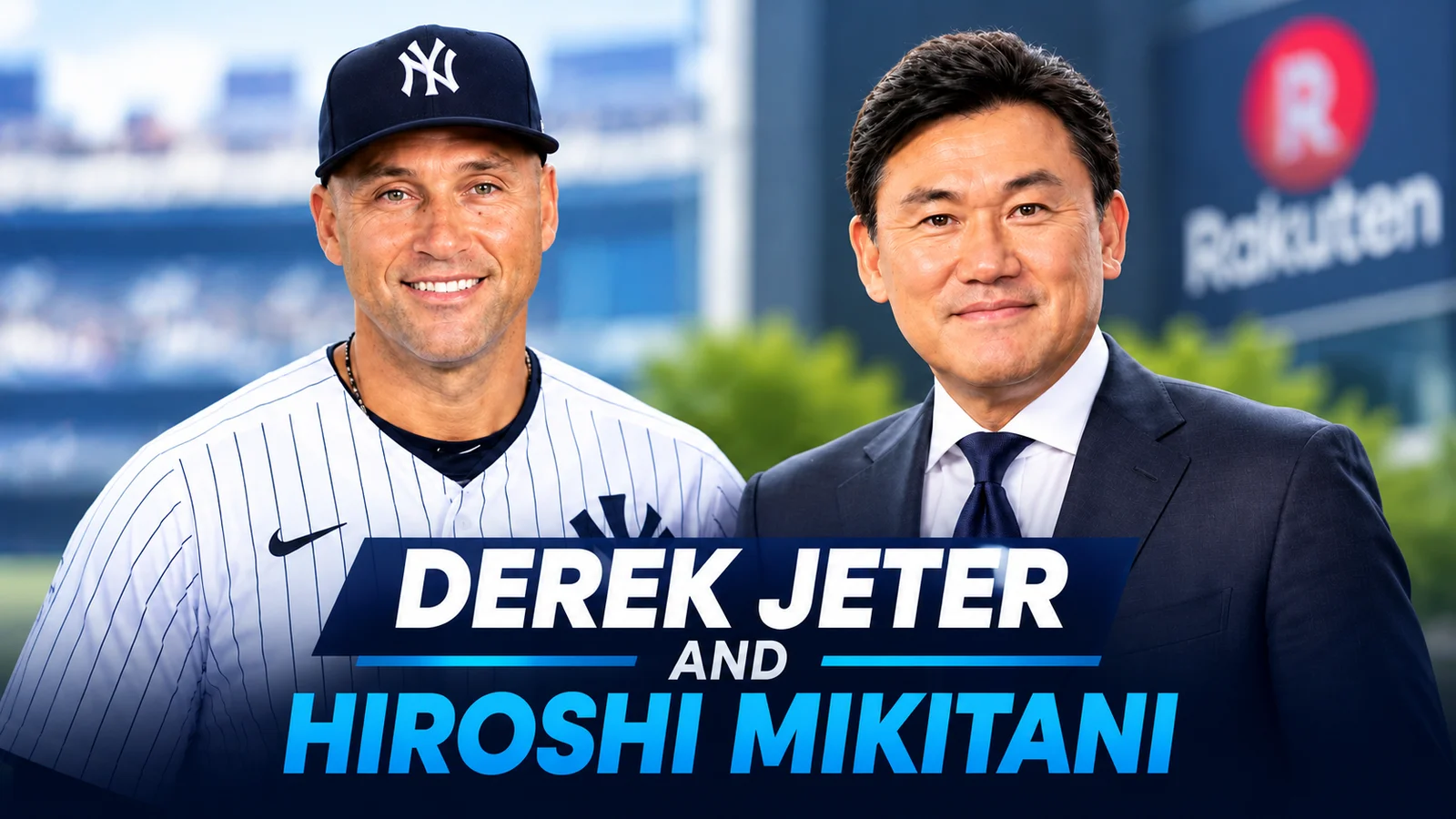
Derek Jeter and Hiroshi Mikitani built their reputations in very different environments, yet their careers reveal important similarities in leadership, brand development, and long-term business thinking. Jeter became one of the most recognizable figures in professional baseball before moving into sports ownership and business leadership. Mikitani founded Rakuten and developed it into a major Japanese technology and e-commerce company with an international presence.
One made his name on baseball’s biggest stages, while the other pursued opportunities in technology, online commerce, and digital services. Their professional paths illustrate how success in one field can create opportunities in another, but also how established reputations must be supported by sound decisions and effective execution.
For readers interested in sports business, entrepreneurship, and executive leadership, examining Derek Jeter and Hiroshi Mikitani offers a useful perspective on what it takes to build a recognizable brand, manage complex organizations, and pursue ambitious goals in competitive markets.
Who Are Derek Jeter and Hiroshi Mikitani?
Although they operate in different industries, both figures have influenced how organizations connect with audiences, customers, and business partners.
Derek Jeter: From Baseball Star to Business Leader
Derek Jeter is a former professional baseball player best known for his career with the New York Yankees. He spent his entire 20-season Major League Baseball career with the franchise, becoming its captain and one of its most prominent modern-era players.
Jeter’s accomplishments include five World Series championships and induction into the National Baseball Hall of Fame in 2020. His reputation was built through consistent performance, leadership, and a long association with one of the most recognizable franchises in American sports.
His career after playing extended beyond endorsements and public appearances. Jeter became involved in sports ownership and executive management, most notably through his role as chief executive officer and a minority owner of the Miami Marlins beginning in 2017. He departed the organization in 2022.
These experiences placed him in a different kind of competitive environment. Instead of focusing on individual performance on the field, he had to consider organizational strategy, personnel decisions, commercial opportunities, and the financial realities of operating a professional sports franchise.
Jeter’s transition illustrates an important distinction: being successful as an athlete does not automatically guarantee success as an executive. Business leadership requires different skills, including financial judgment, delegation, and the ability to evaluate decisions beyond immediate results.
Hiroshi Mikitani: The Entrepreneur Behind Rakuten
Hiroshi Mikitani is a Japanese entrepreneur and the founder of Rakuten, a company established in 1997 as an online marketplace. He has served as its leading executive as the business expanded into financial technology, mobile communications, digital content, travel, and other services.
Mikitani’s approach has involved building an interconnected business ecosystem rather than relying on a single product category. Rakuten’s marketplace helped establish its commercial foundation, while its other services created opportunities to serve customers across multiple aspects of their digital lives.
A central feature of Rakuten’s strategy is its loyalty program, Rakuten Points, which connects participation across eligible services. This structure gives customers reasons to engage with more than one part of the business and helps the company build relationships that extend beyond individual purchases.
Mikitani has also pursued international growth, partnerships, and investments. Those efforts reflect an entrepreneurial willingness to explore opportunities outside a company’s original market, although expansion into unfamiliar industries can involve substantial financial and operational risks.
His career provides a useful example of how a founder can shape corporate direction over many years while balancing innovation, market competition, and the practical challenges of managing a diversified company.
Derek Jeter and Hiroshi Mikitani: What Connects Their Careers?
The differences between baseball and technology are substantial, but several leadership principles help explain why these careers are worth examining together.
Both Built Strong Associations With Recognizable Brands
Jeter’s identity became closely connected to the New York Yankees. The team’s history, championship expectations, and large fan base gave his achievements a broader cultural context.
Mikitani’s identity, meanwhile, became associated with Rakuten’s growth and international ambitions. The company developed from an online marketplace into a wider digital-services business, making its name recognizable across multiple industries.
These examples show how individual leaders and organizational brands can reinforce each other. A respected leader can strengthen confidence in a company, while a successful organization can give its leader greater visibility and influence.
However, the relationship works best when reputation is supported by performance. Brand recognition may attract attention, but customers, employees, investors, and fans ultimately judge organizations by their experiences and results.
Both Operated in Highly Competitive Environments
Professional baseball and digital commerce reward different capabilities, but both demand adaptation.
Jeter competed against elite athletes, managed the pressure of postseason baseball, and worked within a team structure where individual achievements depended partly on collective performance.
Mikitani entered markets shaped by rapid technological change, evolving customer expectations, and established competitors. His leadership required decisions about investment, product development, partnerships, and the allocation of resources across business units.
The common lesson is that competitive success rarely comes from reputation alone. Organizations must continually evaluate their strengths, recognize emerging challenges, and decide where to concentrate their efforts.
For an entrepreneur, this might mean improving a customer experience before a competitor does. For a sports organization, it could involve developing players, improving operations, or building a more sustainable commercial strategy.
How Their Leadership Styles Differ
Comparing their careers also reveals why leadership cannot be reduced to a single formula.
Jeter’s Background in Team Culture and Performance
Jeter spent two decades in an environment where preparation, communication, and accountability were essential. Baseball requires individuals to perform under pressure while remaining part of a larger team.
As a team captain, he operated within a culture shaped by demanding expectations and a long championship tradition. That experience offered exposure to managing pressure, maintaining professional standards, and working toward shared objectives.
Yet the leadership skills required to captain a baseball team differ from those needed to run a corporation. An executive must understand budgets, organizational structures, labor relationships, revenue opportunities, and investment priorities.
Jeter’s move into baseball management demonstrated both the potential and the difficulty of transferring skills from the playing field to the boardroom.
His career is therefore a useful reminder that leadership experience provides a foundation, not a guarantee. New responsibilities require learning, collaboration, and an understanding of the decisions that determine organizational performance.
Mikitani’s Entrepreneurial and Strategic Approach
Mikitani’s leadership developed through founding and expanding a technology company. His responsibilities have included identifying market opportunities, investing in new capabilities, and guiding a business through changing economic and technological conditions.
Entrepreneurial leadership often requires making decisions without complete information. Founders must determine which opportunities deserve investment, how quickly to expand, and when an existing strategy needs to change.
Rakuten’s diversification illustrates this approach. Moving beyond online retail can create additional revenue sources and strengthen customer relationships, but it also introduces complexity. Each new business may require specialized knowledge, regulatory compliance, technical infrastructure, and sustained capital investment.
Mikitani’s experience demonstrates the importance of balancing ambition with execution. A broad corporate vision can create opportunities, but its success depends on whether individual businesses can compete effectively and contribute to the overall organization.
Brand Building: Lessons From Baseball and Technology
A strong brand is more than a name or logo. It represents a set of expectations that audiences develop through repeated experiences.
Jeter and Mikitani illustrate different ways that trust and recognition can develop.
Consistency Creates Recognition
Jeter’s long tenure with the Yankees made his career easy for fans to associate with the franchise. His sustained presence gave audiences a familiar figure through different seasons, teammates, and competitive challenges.
Rakuten has taken a different route by using a common corporate identity across several services. Its loyalty ecosystem helps connect experiences that might otherwise feel like separate transactions.
In both cases, consistency helps people understand what an organization represents.
Businesses can apply this principle by maintaining reliable service, using clear messaging, and making the customer experience predictable. Consistency does not mean refusing to innovate. It means allowing changes to strengthen the brand’s central promise rather than confusing the audience.
Reputation Must Be Supported by Performance
Jeter’s baseball achievements gave his reputation a concrete foundation. His championship record and sustained career provided reasons for fans to associate him with high-level competition.
Rakuten’s continued presence in e-commerce and other digital markets similarly depends on delivering useful services, not simply promoting a recognizable name.
For smaller companies, the lesson is practical. Marketing can introduce a business to potential customers, but long-term trust depends on product quality, customer support, transparent policies, and dependable delivery.
A brand becomes more valuable when the experience consistently matches the expectations it creates.
Business Expansion: What Their Careers Reveal
Jeter and Mikitani have approached growth from different starting points, and their experiences highlight two important routes to expansion.
Extending an Established Reputation
For athletes, moving into business can create opportunities in media, endorsements, investments, and team ownership. Their public profiles may help open doors, but the underlying business must still work.
Jeter’s involvement with the Miami Marlins showed how a former player could move into the operational side of professional sports. Ownership and executive management, however, involve decisions that fans do not necessarily see, including financial planning, staffing, organizational priorities, and long-term competitiveness.
A familiar name can generate initial attention, but sustainable success depends on the organization’s performance.
The same principle applies to entertainers, athletes, and other public figures launching companies. Their existing audiences may provide an advantage, but a viable business still needs customers, effective management, and a clear value proposition.
Expanding Into Adjacent Markets
Mikitani’s approach has emphasized building a wider business ecosystem around Rakuten’s original marketplace.
Adjacent-market expansion can be attractive because a company may already have customers, technology, data capabilities, or distribution channels that support new services. A loyalty program, for example, can encourage customers to use multiple products while giving the business additional ways to engage with them.
Nevertheless, diversification has limits. Entering a new industry simply because it appears promising can distract management from the company’s core strengths.
A sensible expansion strategy evaluates whether a new business complements existing operations, whether the company has the necessary expertise, and whether the expected benefits justify the cost and risk.
For business owners, this means pursuing growth opportunities that build on proven capabilities rather than expanding solely to increase the size of the company.
What Entrepreneurs Can Learn From Derek Jeter and Hiroshi Mikitani
Their careers offer several practical lessons for people building businesses, managing teams, or developing professional reputations.
1. Build Credibility Before Expanding
A strong reputation creates opportunities, but credibility usually develops through repeated performance.
Entrepreneurs should focus first on delivering a dependable product or service. Once customers understand the business’s strengths, expansion becomes easier to evaluate and communicate.
Jeter’s long baseball career and Rakuten’s evolution from an online marketplace demonstrate different ways an established foundation can support future opportunities.
2. Learn the Skills Required for the Next Stage
The abilities that create early success may not be sufficient for a larger organization.
A talented professional may excel at individual work but struggle to manage a growing team. A founder may understand a product exceptionally well but need additional expertise in finance, compliance, or operations.
The solution is to identify capability gaps early and build the necessary support through training, experienced employees, advisers, or business partners.
3. Treat Brand Reputation as a Responsibility
A recognized name can increase expectations. Customers and employees may assume that an established organization will provide reliable quality and clear communication.
Businesses should therefore protect their reputation through consistent standards and honest decision-making. Short-term gains that undermine trust can make future growth more difficult.
4. Evaluate Growth Beyond Headlines
Expansion, acquisitions, partnerships, and new product launches can attract attention, but activity is not the same as success.
Entrepreneurs should consider profitability, customer retention, operational efficiency, and the long-term value created by each initiative.
For a sports franchise, relevant questions include how resources are allocated and whether the organization is building a sustainable competitive structure. For a technology company, the focus may include customer engagement, service quality, and the economics of new business lines.
5. Balance Vision With Execution
Ambitious goals can motivate an organization, but they must be translated into practical priorities.
Leaders need to communicate a clear direction, assign responsibilities, monitor progress, and adjust when assumptions prove incorrect. This is especially important when an organization expands into new markets or adopts unfamiliar business models.
Vision determines where an organization wants to go. Execution determines whether it can get there.
Frequently Asked Questions
Are Derek Jeter and Hiroshi Mikitani business partners?
Derek Jeter and Hiroshi Mikitani are not generally known as business partners. Jeter is primarily associated with professional baseball and sports-related business ventures, while Mikitani is known for founding and leading Rakuten. Their careers are useful to compare because of their different approaches to leadership and brand development.
Who is Derek Jeter?
Derek Jeter is a former New York Yankees shortstop who played 20 seasons in Major League Baseball. He won five World Series championships, served as the Yankees’ captain, and entered the Baseball Hall of Fame in 2020. He later became involved in professional sports ownership and executive management.
Who is Hiroshi Mikitani?
Hiroshi Mikitani is a Japanese entrepreneur who founded Rakuten in 1997. He helped grow the company from an online marketplace into a diversified digital-services business that includes e-commerce, financial technology, and mobile communications.
What company did Hiroshi Mikitani found?
Mikitani founded Rakuten, originally an online shopping marketplace in Japan. The company subsequently expanded into additional services, including financial services, travel, digital content, and telecommunications.
Did Derek Jeter own the Miami Marlins?
Jeter became a minority owner of the Miami Marlins and served as the team’s chief executive officer in 2017. He left the organization in 2022. His involvement marked a transition from playing professional baseball to participating in the management of a Major League Baseball franchise.
What can entrepreneurs learn from Derek Jeter’s career?
Entrepreneurs can learn the value of consistency, preparation, accountability, and building a reputation over time. His transition from athlete to executive also illustrates that professional success in one field does not remove the need to develop new skills when taking on different responsibilities.
What can businesses learn from Rakuten’s growth?
Rakuten’s development demonstrates the potential benefits of building complementary services around an established business Derek Jeter and Hiroshi Mikitani. Its marketplace and loyalty ecosystem offer an example of how a company can encourage customer engagement across different products. However, diversification also requires careful investment decisions and effective management.
How do Derek Jeter and Hiroshi Mikitani differ as leaders?
Jeter’s leadership experience developed primarily through professional sports and later sports management. Mikitani’s experience centers on entrepreneurship, technology, and corporate strategy. Their different backgrounds highlight how leadership principles can transfer across industries while the practical skills required for each role remain distinct.
Why is brand reputation important in business?
Brand reputation influences how customers, employees, investors, and partners perceive an organization. A strong reputation can support customer loyalty and open new opportunities, but it must be maintained through dependable performance, transparent communication, and consistent standards.
What is the main lesson from comparing Derek Jeter and Hiroshi Mikitani?
The main lesson is that long-term success requires more than recognition or ambition. Both careers highlight the importance of building credibility, adapting to new responsibilities, and aligning a clear vision with effective execution. Their experiences also show that success in one environment does not automatically guarantee success in another.
Conclusion
Derek Jeter and Hiroshi Mikitani represent two distinct paths to leadership. Jeter built a celebrated career in Major League Baseball before exploring the challenges of sports ownership and executive management. Mikitani founded Rakuten and pursued a broader vision of connecting customers with services across the digital economy.
Their professional journeys differ in industry, expertise, and organizational structure, but they offer related lessons about credibility, brand development, and sustainable growth. Both illustrate the value of establishing a strong foundation before pursuing new opportunities, while their experiences also show that expansion introduces fresh responsibilities and risks.
For entrepreneurs and business leaders, the most useful takeaway is not that one leadership model works everywhere. It is that successful organizations must understand their strengths, invest in the capabilities they need, and consistently deliver on their promises. A recognizable brand may create an opening, but thoughtful strategy and effective execution determine what happens next.

1 Comment
Pingback: Satya Nadella and Michel Vounatsos: Leadership, Innovation, and the Future of Healthcare Technology