


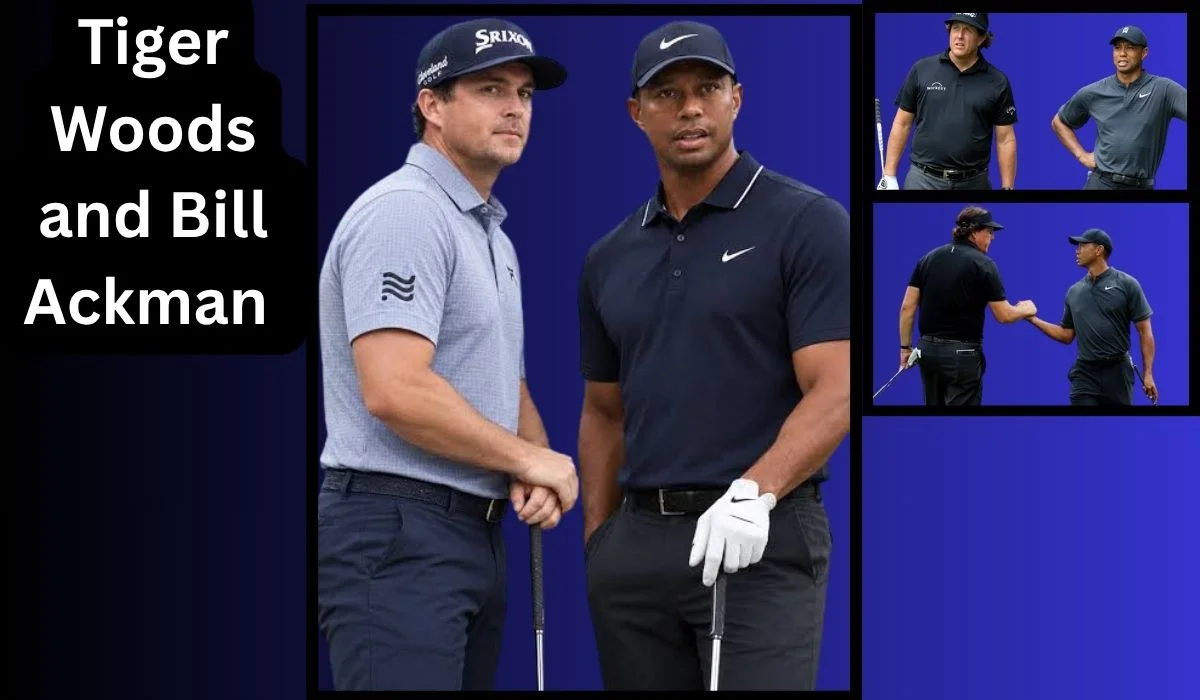
Tiger Woods and Bill Ackman operate in very different worlds, yet both illustrate how talent, strategic thinking, and a willingness to take calculated risks can shape a public career. Woods became one of the most recognizable figures in professional golf, transforming expectations for athletic performance and helping expand the sport’s commercial reach. Ackman built his reputation in the financial industry as an outspoken investor known for concentrated investment positions, detailed research, and high-profile market campaigns.
The connection between Tiger Woods and Bill Ackman is best understood through their individual achievements rather than an assumed personal or professional partnership. Woods represents excellence in competitive sports, while Ackman represents a distinctive approach to investing and business leadership. Their careers also offer useful perspectives on reputation, resilience, philanthropy, and the responsibilities that accompany public influence.
For readers interested in celebrity wealth, business strategy, professional achievement, or philanthropy, comparing these two figures provides a broader look at how success develops in different industries. It also highlights an important distinction: the skills that create a champion in sports are not identical to those that produce a successful investor, even when some underlying principles overlap.
Who Is Tiger Woods?
Tiger Woods is an American professional golfer widely regarded as one of the most influential players in the history of the sport. Born Eldrick Tont Woods on December 30, 1975, he became a national sensation as a young golfer before turning professional in 1996.
His rise changed the public profile of golf. Woods combined exceptional technical ability with intense preparation, competitive confidence, and an ability to perform under extraordinary pressure. His achievements attracted longtime golf fans and introduced new audiences to professional tournaments.
Career achievements and major championships
Woods won 15 men’s major championships, placing him second on the all-time list behind Jack Nicklaus, who won 18. His major victories include five Masters Tournament titles, four PGA Championships, three U.S. Open titles, and three Open Championships.
His 1997 Masters victory was particularly significant. At 21, Woods won by 12 strokes, setting a record for the largest margin of victory at the tournament at that time. The performance announced the arrival of a player whose combination of power, precision, and mental focus would influence golf for years.
In 2000, Woods won the U.S. Open, The Open Championship, and the PGA Championship in succession. He completed the achievement with a victory at the 2001 Masters, giving him four consecutive major titles across two seasons. This accomplishment is commonly known as the “Tiger Slam,” although it was not a calendar-year Grand Slam.
Woods also spent a record 683 weeks at No. 1 in the Official World Golf Ranking. These accomplishments established a competitive standard that shaped discussions about greatness in professional golf.
How Tiger Woods changed the business of golf
Woods’s influence extended beyond tournament results. His popularity helped make golf more visible in mainstream sports coverage, increased attention around major championships, and strengthened the commercial value of elite players.
Sponsors recognized that Woods appealed to audiences far beyond traditional golf demographics. His endorsements and business partnerships demonstrated how an athlete’s competitive achievements, personal brand, and public visibility could combine to create substantial commercial opportunities.
His impact also helped inspire a new generation of golfers. Young players saw that the sport could reward athleticism, physical conditioning, technical innovation, and mental preparation. Although golf’s growth has many contributing factors, Woods was one of its most consequential modern ambassadors.
Who Is Bill Ackman?
Bill Ackman is an American billionaire investor and the founder and chief executive of Pershing Square Capital Management, an investment management firm established in 2004. Born on May 11, 1966, Ackman developed a reputation for an activist investment strategy that often involves taking substantial positions in publicly traded companies and advocating changes he believes could improve shareholder value.
Unlike a traditional investor who may remain largely behind the scenes, Ackman frequently explains his views publicly. His presentations and investment campaigns have made him a prominent and sometimes controversial figure in financial markets.
Investment philosophy and activist investing
Activist investing generally involves purchasing a meaningful ownership stake in a company and using that position to push for strategic, operational, financial, or governance changes.
Ackman’s approach has included advocating changes to corporate leadership, business structures, capital allocation, and long-term strategy. He typically seeks situations where he believes a company is undervalued or could perform better under a different plan.
His investment history includes prominent campaigns involving companies such as Canadian Pacific Railway, where his involvement helped bring about leadership and operational changes. Other investments have produced very different outcomes, illustrating the uncertainty inherent in concentrated investment strategies.
Ackman’s experience demonstrates that conviction alone does not guarantee success. Investors must evaluate business fundamentals, management decisions, competitive conditions, market sentiment, and the possibility that their original thesis may be wrong.
The role of Pershing Square
Pershing Square became the central platform for Ackman’s investment activities. The firm is associated with a concentrated portfolio approach, detailed public presentations, and a willingness to take visible positions on major corporate questions.
This approach can offer meaningful opportunities when an investment thesis proves correct. However, concentrated portfolios also expose investors to significant losses when assumptions fail or market conditions change.
Ackman’s career is therefore relevant not only to investors interested in activist strategies but also to anyone studying risk management, corporate governance, and the relationship between public persuasion and business outcomes.
Tiger Woods and Bill Ackman: Is There a Direct Connection?
One reason people search for Tiger Woods and Bill Ackman together is the overlap between professional sports, corporate investment, celebrity branding, and major American companies. However, it is important to distinguish a documented connection from an assumption based on their public profiles.
There is no clearly established public evidence of a formal business partnership or close personal relationship between Woods and Ackman in the sources reviewed for this article.
Their professional activities are different. Woods operates through TGR and its related businesses, while Ackman directs investment activities through Pershing Square. Both have participated in the broader American business environment, but that does not establish that they have worked together.
The Nike connection
Nike provides a useful example of how two prominent figures can be associated with the same company in different ways.
Woods had a long-running relationship with Nike, which helped build his commercial identity as a professional golfer. His association with the brand illustrated how elite athletes can influence consumer recognition and sports marketing.
Ackman, meanwhile, is known for his investment activities through Pershing Square. The firm’s investment interests have included major publicly traded businesses, and its reported Nike investment in 2024 attracted attention from investors following the company.
These separate associations should not be confused with a direct partnership. Owning shares in a publicly traded company does not establish a business relationship with every athlete who has endorsed that company’s products.
The distinction matters when researching celebrity business connections. A credible account should identify the specific transaction, investment, or agreement rather than infer a relationship from overlapping corporate associations.
Comparing Their Leadership Styles
Tiger Woods and Bill Ackman provide contrasting examples of leadership in highly competitive environments. Woods has operated in a setting where performance is measured through tournaments, rankings, and championship results. Ackman works in financial markets, where investment decisions are assessed through portfolio performance, business outcomes, and risk-adjusted returns.
Despite these differences, several useful comparisons emerge.
Preparation and research
Woods’s career demonstrates the importance of technical practice, physical preparation, and attention to detail. Professional golf requires athletes to adjust to changing weather, course conditions, competitive pressure, and their own physical limitations.
Ackman’s investment approach also places considerable emphasis on preparation. Evaluating a company can require extensive analysis of its financial statements, management, competitive position, and future prospects.
The shared lesson is that high-stakes decisions benefit from preparation that extends beyond surface-level impressions.
For a golfer, that means understanding the course and refining the mechanics of a swing. For an investor, it means understanding a company’s economics and identifying the assumptions behind an investment thesis.
Decision-making under pressure
Elite golf offers little opportunity to delegate a critical shot once a player is standing over the ball. The athlete must interpret the situation, select a strategy, and execute it despite the consequences of a mistake.
Investment management presents a different but equally demanding challenge. Investors must decide whether to maintain a position, reduce exposure, or change their view when new information emerges.
Woods and Ackman illustrate two distinct forms of decision-making under uncertainty. In both settings, confidence can be valuable, but confidence must be supported by sound judgment and a willingness to adapt.
Managing reputation
Public reputation is an important asset for both athletes and investors.
Woods’s achievements helped establish an enduring sports legacy, but his career has also included highly publicized personal challenges and injuries. His experience illustrates how public figures can face scrutiny beyond their professional performance.
Ackman’s public investment campaigns similarly expose him to scrutiny. His outspoken approach can attract support when his arguments persuade investors, but it can also generate criticism when a strategy produces disappointing results or divides opinion.
Neither career suggests that reputation is permanent or entirely controllable. Trust is built over time through performance, communication, and how individuals respond to setbacks.
Business Ventures Beyond Their Primary Careers
Both men have developed activities beyond their best-known professional roles, although the nature of their businesses differs considerably.
Tiger Woods as an entrepreneur
Woods’s business activities are organized under the broader TGR brand. Its ventures include golf course design, charitable initiatives, event production, and hospitality. Tiger Woods+1
TGR Design allows Woods to apply his knowledge of competitive golf to course architecture. Course design requires consideration of strategy, playability, terrain, visual presentation, and the experience of golfers with different skill levels.
His entrepreneurial work also reflects a broader career strategy: building businesses that draw on the expertise, recognition, and relationships developed during his years as a professional athlete.
Woods’s ventures are not simply extensions of his tournament record. They require collaboration with designers, business managers, operators, sponsors, and other professionals who can translate a recognizable personal brand into sustainable commercial activities.
Bill Ackman as an investment leader
Ackman’s principal professional identity remains closely associated with Pershing Square and its investment strategy.
His work involves assessing businesses as potential investments and, in some cases, advocating changes that he believes can improve their long-term value. This model differs from building a consumer brand, because investment performance depends on company valuations, market conditions, capital allocation, and the timing of decisions.
His career also demonstrates the importance of distinguishing between personal wealth, investment-fund assets, and the value of companies in which a fund holds shares. These are different financial measures and should not be treated as interchangeable when evaluating an investor’s success.
For readers researching Bill Ackman’s business activities, the most useful approach is to examine documented holdings, corporate roles, published investment positions, and relevant financial disclosures rather than relying exclusively on estimated net-worth figures.
Philanthropy and Social Impact
Philanthropy provides another meaningful point of comparison between Woods and Ackman. Both have established philanthropic initiatives, but their organizations have different structures and areas of emphasis.
Tiger Woods and the TGR Foundation
Woods and his parents established the organization now known as TGR Foundation in 1996. Its educational work focuses on creating opportunities for young people, including learning experiences in science, technology, engineering, and mathematics. Tiger Woods+1
The foundation’s learning programs and educational initiatives extend Woods’s influence beyond golf. They reflect the idea that a prominent athlete can use public recognition to draw attention to educational opportunities and help support students pursuing their interests.
This work also illustrates why philanthropic impact should be evaluated separately from sporting success. Tournament victories measure athletic performance; educational outcomes require different indicators, including participation, access to learning resources, and longer-term student progress.
Bill Ackman and the Pershing Square Foundation
Ackman founded the Pershing Square Foundation in 2006. The foundation supports philanthropic initiatives across areas that have included education, health, economic development, and other social-impact priorities. Pershing Square+1
Its activities reflect a different model of philanthropy from Woods’s education-focused work. Rather than drawing primarily on an athlete’s relationship with sport, Ackman’s foundation operates within a broader philanthropic and investment-oriented network.
Comparing these initiatives highlights an important point: charitable work can take many forms. Some organizations concentrate on a particular population or educational pathway, while others support a wider range of institutions and causes.
In either case, meaningful evaluation requires looking at what the organization funds, whom it serves, and what results its programs achieve.
What Can Readers Learn From Their Careers?
The careers of Tiger Woods and Bill Ackman offer several practical lessons for professionals, entrepreneurs, and people developing their own long-term goals.
Build expertise before expanding
Woods established himself as an exceptional golfer before expanding into course design, hospitality, and other ventures. Ackman developed experience in investment management before establishing Pershing Square.
Their paths illustrate the value of building a strong foundation of expertise. Expanding into related opportunities becomes more manageable when a person understands the underlying industry and can recognize where existing skills are transferable.
For an entrepreneur, this could mean mastering one service before introducing additional offerings. For a professional, it could mean developing a demonstrable area of expertise before pursuing leadership responsibilities.
Treat setbacks as part of a long career
Neither sports nor investing offers a guarantee of consistent success. Injuries, difficult competitive periods, changing market conditions, and incorrect decisions can disrupt even highly accomplished careers.
A useful response to setbacks involves reviewing what happened, identifying what can be controlled, and adapting the next decision accordingly.
This does not mean every failure automatically produces a valuable lesson. Progress depends on honest evaluation and practical changes rather than simply maintaining confidence.
Understand the difference between visibility and achievement
Both Woods and Ackman have attracted significant public attention. However, visibility is not the same as performance, and popularity does not establish expertise in every field.
Woods’s golfing record can be assessed through championships and competitive achievements. Ackman’s investment work can be examined through financial results, disclosed positions, and corporate outcomes.
For anyone evaluating a public figure, separating verifiable accomplishments from reputation and speculation leads to a more reliable understanding of their influence.
Frequently Asked Questions
1. Who are Tiger Woods and Bill Ackman?
Tiger Woods is an American professional golfer and entrepreneur known for winning 15 major championships. Bill Ackman is an American investor and the founder and chief executive of Pershing Square Capital Management.
2. Are Tiger Woods and Bill Ackman business partners?
No formal business partnership between Woods and Ackman has been established in the public sources reviewed for this article. Their separate professional activities should not be interpreted as evidence of a joint venture.
3. Are Tiger Woods and Bill Ackman friends?
There is insufficient verified public information to establish that they are close personal friends. Without reliable confirmation, claims about their private relationship should be treated cautiously.
4. What connects Tiger Woods and Bill Ackman?
Their connection is best understood through their prominence in American sports and business, as well as their separate relationships with the corporate world. Nike is one example of an overlapping corporate association, but it does not establish a direct relationship between the two men.
5. What is Tiger Woods best known for?
Woods is best known for his extraordinary professional golf career, including 15 major championships, five Masters Tournament victories, and a record 683 weeks at No. 1 in the Official World Golf Ranking.
6. What is Bill Ackman best known for?
Ackman is best known for activist investing, concentrated investment strategies, and leading Pershing Square Capital Management. His public campaigns involving major companies have made him a recognizable figure in finance.
7. Does Bill Ackman own Tiger Woods’s businesses?
No verified public evidence reviewed for this article establishes that Ackman owns a stake in Woods’s private businesses. An investment in a publicly traded company associated with an athlete does not automatically confer ownership of that athlete’s separate ventures.
8. What philanthropic work does Tiger Woods support?
Woods founded TGR Foundation with his parents in 1996. The organization focuses on educational opportunities for young people, including STEM learning and programs designed to support academic and career development.
9. What philanthropic work is associated with Bill Ackman?
Ackman founded the Pershing Square Foundation, which supports charitable initiatives across several areas, including education, health, and economic development.
10. What lessons can entrepreneurs learn from Tiger Woods and Bill Ackman?
Their careers highlight the importance of preparation, specialized knowledge, strategic decision-making, resilience, and long-term reputation. They also demonstrate that success in one field does not eliminate risk or guarantee success in another.
Conclusion
Tiger Woods and Bill Ackman represent two distinct forms of achievement in American public life. Woods built a historic golfing career and expanded into entrepreneurship and education-focused philanthropy. Ackman established a prominent investment firm and developed a reputation for activist investing and public corporate advocacy.
Their careers overlap in the broader worlds Tiger Woods and Bill Ackman of branding, business, and public influence, but a meaningful comparison does not require assuming a personal relationship or shared business venture.
For readers researching Tiger Woods and Bill Ackman, the most useful perspective is to understand each man’s documented accomplishments, professional responsibilities, and philanthropic activities on their own terms. Their experiences offer valuable insights into preparation, leadership, calculated risk, and the challenge of sustaining success over time.

1 Comment
Pingback: Joel Greenblatt and Jim Farley: Two Different Approaches to Business Success